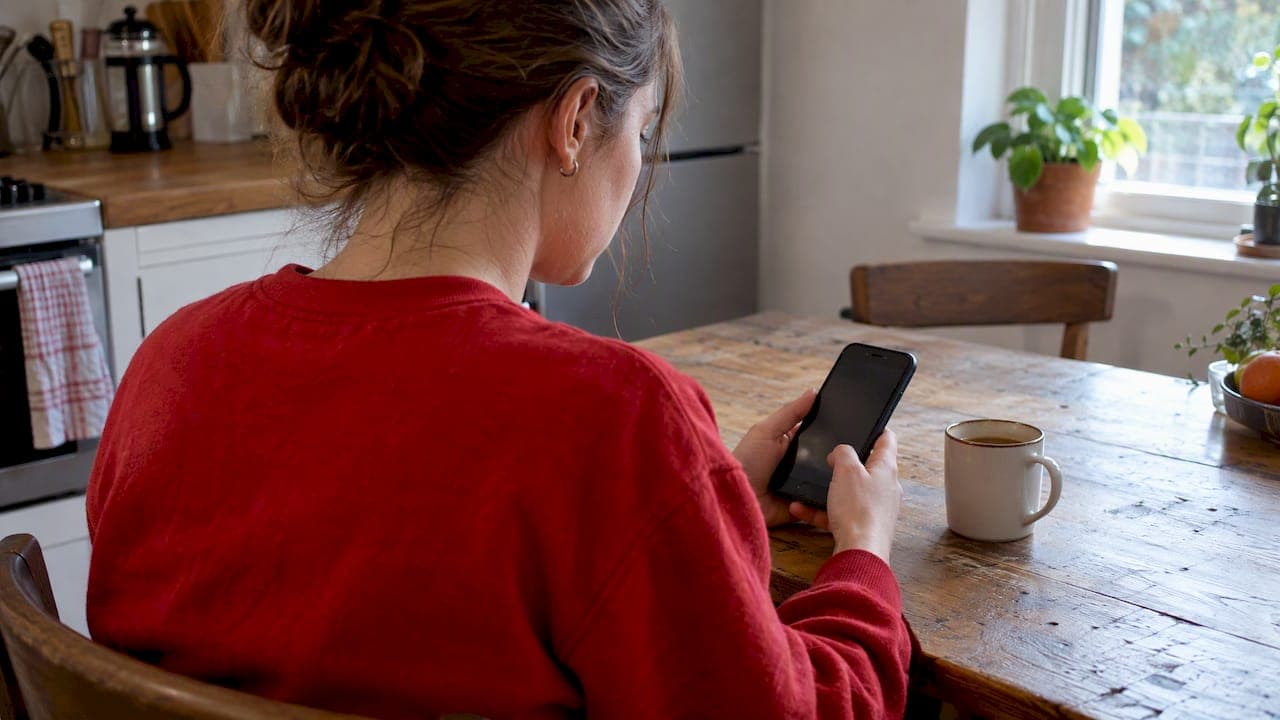
Posting anxiety is the fear of sharing content online because of anticipated judgment, whether that judgment is criticism or unwanted attention. If a draft is sitting unposted right now, try a 3-minute slow-breathing exercise, then publish one small, reversible post, something you can delete or edit if it feels wrong.
TL;DR:
- Nearly half of posting anxiety stems from fear of judgment, critical comments, or unwanted reactions, heavily influencing reluctance to post.
- Using controlled exposure, such as liking or commenting privately first, helps build tolerance and reduces avoidance behaviors over time.
- Practicing in low-pressure environments like anonymous apps can lessen the fear of permanence and public scrutiny during early exposure.
- Implementing simple breathing exercises and reframing scripts before posting can lower immediate physical and mental barriers.
- Persistent avoidance affecting daily life may require professional help, including therapy or medical support, especially if panic attacks or low mood continue.
Table of Contents
- What posting anxiety is and how it differs from general social anxiety
- What research and clinical guidance say about treating it
- Practical tactics to use right now before posting
- A step-by-step exposure plan for posting practice
- How to manage responses and avoid slipping back
- When posting anxiety needs professional support
- A note on practicing in lower-stakes spaces
- A lower-pressure place to practice sharing
- Sources
- FAQ
What posting anxiety is and how it differs from general social anxiety
General social anxiety centers on in-person interactions: meetings, parties, phone calls. Posting anxiety is narrower and stranger. It is tied to an audience you cannot see, numbers that update in real time, and a post that stays visible long after you have stopped thinking about it. A Journal of Media Psychology study developed a six-item scale called the SMPAQ and found posting anxiety tracks closely with low interpersonal trust, a strong fear of negative evaluation, and a tendency to feel hurt easily by criticism. People high in these traits were measurably less willing to post at all.
Common triggers tend to repeat across people:
- Comparing your draft to other people's polished, successful posts.
- Watching like and view counts climb or stall after publishing.
- Posting to an audience that mixes coworkers, family, and strangers.
- Remembering a past comment or reaction that stung.
What research and clinical guidance say about treating it
The evidence here is more hopeful and more specific than most people expect. The SMPAQ research found that posting anxiety accounted for close to half the variance in a single-factor model of unwillingness to post, meaning the fear is measurable and consistent rather than vague discomfort. A few other findings reshape how to think about the problem:
- A Stanford FSI summary found anxiety sometimes increases willingness to post, specifically when the goal is seeking reassurance or connection rather than approval.
- The WHO Europe policy brief cautions that digital effects are mixed and depend heavily on the person and the activity, not social media use in general.
- NHS guidance on social anxiety recommends self-help steps, including a thought diary, breathing practice, and breaking large challenges into smaller, manageable parts.
Taken together, this points to a plan that treats the specific trigger (judgment, visibility, criticism sensitivity) rather than offering generic reassurance.
Practical tactics to use right now before posting
Before anything else, settle your body. A racing heart makes every cognitive strategy harder to apply.
- Breathe slowly for three minutes. Inhale for four counts, hold for four, exhale for six, and repeat; this activates the body's calming response before you touch the keyboard.
- Write two reframing scripts in advance. Counter mind-reading with "I don't actually know what they'll think" and counter catastrophizing with "If this goes badly, I can delete it in ten seconds."
- Use drafts and scheduling. Save a post for an hour before sending it, then reread it once with fresh eyes rather than five times in a panic.
- Narrow your audience first. Post to a close-friends list or a private group before going public, which lowers the stakes without avoiding the task entirely.
- Set one check window. Decide you will look at responses once, 60 minutes after posting, instead of refreshing every few minutes.
- Favor active engagement over passive scrolling. A 2023 study of college students found active use, like commenting and posting, was linked to lower social anxiety, while passive scrolling was linked to higher anxiety.
Pro Tip: Comment on someone else's post before you publish your own; it warms up the same muscle with far less exposure.
A step-by-step exposure plan for posting practice
Avoidance keeps posting anxiety alive. Oxford Health's self-help guide recommends building an exposure hierarchy: a ladder of tasks ordered from mildly uncomfortable to genuinely hard, worked through on purpose and repeatedly. The goal is not to eliminate anxiety immediately but to learn it is tolerable and fades with repetition.
A sample ladder, graded low to high:
- Like or comment on someone else's post.
- Send a private message sharing an opinion.
- Reshare someone else's post with a short comment added.
- Post to a small, controlled group or close-friends list.
- Post publicly without tagging anyone.
- Post publicly with tags included.
Stay with each step until the anxiety drops by roughly half, which the Oxford Health guide suggests often takes several tens of minutes; repeat each level multiple times per week before moving up.
After every attempt, note three things:
- Your anxiety rating before and during the task.
- What actually happened, not what you feared would happen.
- One concrete thing you learned that you can carry into the next attempt.
Gradually drop safety behaviors, like rereading a post ten times or asking a friend to approve it first, since these quietly keep the fear alive even as you climb the ladder.
How to manage responses and avoid slipping back
Once you've posted, the work shifts from exposure to response management. Pick one scheduled time to check reactions and treat anything outside that window as off-limits for rumination.
Positive attention can be its own hurdle. A 2022 meta-analysis found fear of positive evaluation adds measurable explanatory power to social anxiety beyond fear of criticism, meaning praise can feel as loaded as judgment. Practice a simple script: "Thank you" is a complete response; you don't owe an explanation or a follow-up.
For negative comments, decide your rules ahead of time: delete anything abusive, ignore anything vague, and respond only to comments that raise a fair point.

Pro Tip: Keep a short list of past posts that went fine; reread it when a new post feels unusually threatening.
When posting anxiety needs professional support
Most posting anxiety responds to self-directed practice, but some signs call for more than a ladder and a breathing routine.
- Avoidance that is affecting work, relationships, or daily functioning, not just social apps.
- Panic attacks triggered by the thought of posting or checking responses.
- Persistent low mood alongside the anxiety.
- Continued inability to post despite consistent, honest effort over several weeks.
NHS guidance points to CBT, including guided self-help programs, and medication when clinically appropriate, though available services differ by country. A reasonable next step is a conversation with a primary care provider or a licensed therapist, or enrolling in a guided online CBT program where one is available.
A note on practicing in lower-stakes spaces
I think the hardest part of posting anxiety isn't the fear itself, it's that most platforms are built around permanence, follower counts, and public identity, which makes early practice feel riskier than it needs to be. Practicing in a smaller, anonymous, or moderated space first lets you work through the exposure ladder without the metrics amplifying every step. Echoes is one such space: no public profile, no follower count, just the act of sharing a thought.
— John
A lower-pressure place to practice sharing
Echoes offers anonymous sharing with no public profiles, no follower counts, and no performance pressure attached to every post. Community guidelines keep the space moderated, so practicing the exposure steps above happens somewhere designed for genuine conversation rather than audience-building.

This isn't a substitute for clinical care when anxiety is severe or persistent, but it's a reasonable place to work through smaller, early rungs of the ladder before posting publicly elsewhere. You can try it at Echoesapp.
Sources
- Social media posting anxiety: Interpersonal trust, fear of negative evaluation, and hurt feeling proneness as predictors — Journal of Media Psychology
- Anxious posting: psychology of sharing online — Stanford FSI
- Social anxiety (social phobia) - NHS
- Shyness & social anxiety - Oxford Health self-help guide
FAQ
What is the 3-3-3 rule for anxiety?
The 3-3-3 rule is a grounding technique: name three things you see, three sounds you hear, and move three parts of your body. It's a quick way to interrupt a spiral of anxious thoughts before posting or checking responses.
Should I quit my job if I have panic attacks?
Panic attacks on their own usually don't require quitting a job; NHS guidance recommends addressing the underlying anxiety through self-help steps or CBT first. If panic is frequent and severely affecting your ability to work, that's a sign to speak with a doctor or therapist about treatment options.
Why do I panic in crowds?
Crowd panic often stems from feeling watched or judged by many people at once, a heightened version of the same fear of negative evaluation linked to posting anxiety. Breathing techniques and gradual exposure to busier settings can reduce the intensity over time.
What is the number one worst habit for anxiety?
Compulsive checking, whether of notifications, comments, or symptoms, tends to reinforce anxiety rather than relieve it. Setting a single check window instead of repeatedly monitoring responses is one of the more reliable ways to break that cycle.
Can practicing on an anonymous app help with posting anxiety?
Practicing in an anonymous, low-visibility space can lower the stakes of early exposure steps since there's no public profile or follower count attached. Echoes is designed around this kind of judgment-free sharing, making it one option for early practice before posting more publicly elsewhere.